


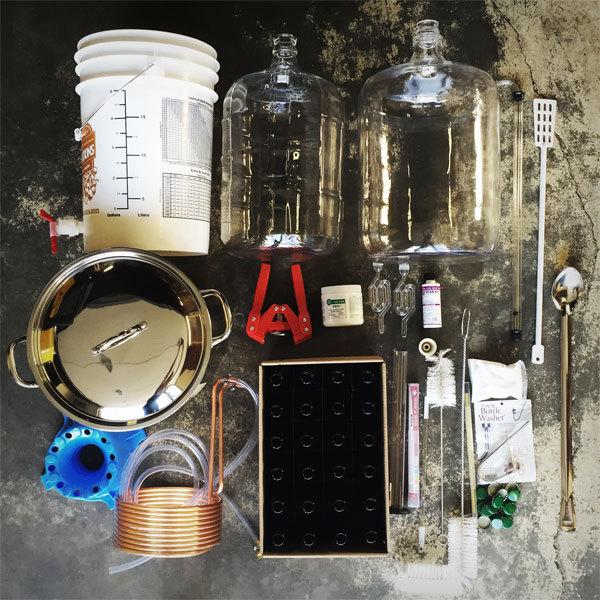
Embarking on the journey of home winemaking is one of the most rewarding intersections of science, patience, and culinary art. Whether you are using a concentrated kit, fresh vineyard grapes, or fruit from your own backyard, the transition from "fruit juice" to "fine wine" depends heavily on having the right tools at the right time.
In winemaking, the margin for error is often dictated by your equipment. Having a sterile, organized environment isn't just about convenience—it’s about protecting your investment of time and ingredients. This comprehensive checklist breaks down the essential gear you need to move from your first crush to your first celebratory pour.
1. The Fermentation Vessels
Winemaking typically happens in two distinct stages: primary and secondary fermentation. You cannot use the same type of container for both if you want a high-quality result.
Primary Fermenter (The Bucket)
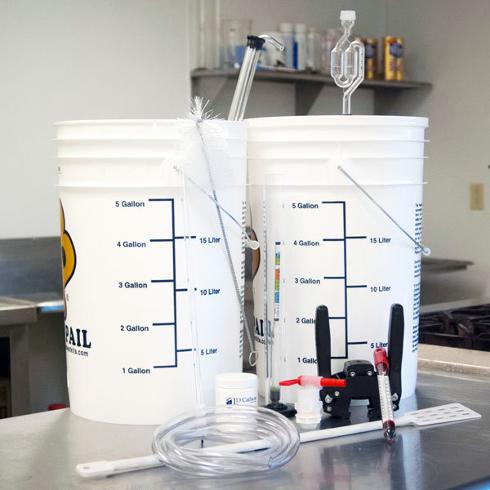
For a standard 6-gallon batch, you should use a 7.9-gallon food-grade plastic bucket. Why the extra space? During the first 5–7 days, fermentation is vigorous. Yeast produces a thick layer of foam and called a "kräusen." If your vessel is too small, the wine will literally climb out of the bucket and onto your floor. A lid with a pre-drilled hole for an airlock is essential.
Secondary Fermenter (The Carboy)
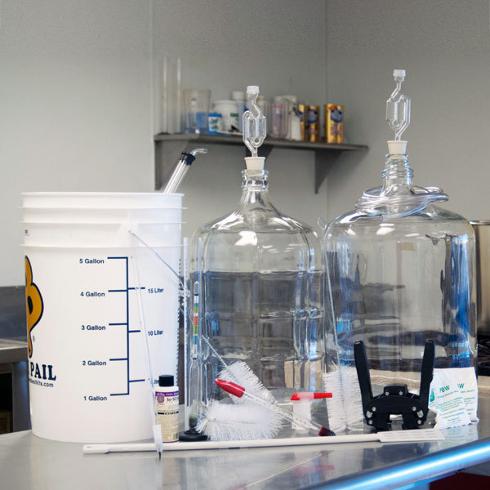
Once the initial fermentation has subsided, you must move the wine into a 6-gallon Glass Carboy or 6 Gallon PET Plastic Carboy. Unlike the primary bucket, the carboy is narrow-necked to minimize the surface area of the wine exposed to oxygen. Oxygen is the enemy of finished wine; too much of it will turn your hard work into vinegar. Glass is traditional and easy to clean, while PET plastic is lightweight and shatterproof.
2. The Guardians: Sanitation and Air Control
CLEANING & SANITIZING
To have a sanitary environment for your wine, you must first clean your equipment. You can't sanitize dirty equipment! There are many cleaners out there but we here at Great Fermentations always use PBW (Powdered Brewery Wash). Don't let the name fool you. It might not say "winery" but PBW is strong enough to handle even the toughest winemaking grit and grime.
For sanitizing, products like Star San or Iodophor are industry standards. Unlike bleach, these do not require rinsing, which prevents the reintroduction of bacteria from your tap water. Simply spray your equipment or soak it for 30–60 seconds.
Head on over to this blog post for a detailed breakdown of the differences between PBW and Star San!
Airlocks and Bungs
The airlock is a small plastic device that fits into the top of your fermenter. When filled with a bit of water or sanitizer, it acts as a one-way valve. It allows the CO2 produced by the yeast to escape while preventing oxygen, wild yeast, and vinegar flies from entering the vessel. You will need a rubber Bung/Stopper that fits the specific size of your carboy neck to hold the airlock in place.
3. Precision Measurement Tools
Winemaking is a chemistry project you can eventually drink. To ensure safety and consistency, you cannot rely on guesswork.
The Hydrometer
This is the single most important tool in your kit. A hydrometer measures the Specific Gravity (SG) of your liquid. By measuring the density of the juice before fermentation (the "Must") and comparing it to the density after fermentation, you can:
- Calculate the exact Alcohol by Volume (ABV%).
- Determine if the yeast has actually finished its job or if the fermentation is "stuck."
- Know exactly when it is safe to bottle without risking "bottle bombs."
Test Jar and Wine Thief
To use the hydrometer, you need a Test Jar (a tall, thin cylinder) and a Wine Thief. The thief is a plastic tube that allows you to extract a sample of wine from the carboy without disturbing the sediment at the bottom.
Thermometer
Yeast is a living organism with a "Goldilocks zone." If the room is too cold, the yeast goes dormant; if it's too hot (typically above 80°F or 27°C), the yeast produces off-flavors that taste like jet fuel. An adhesive "liquid crystal" thermometer stripped onto the side of your fermenter is a cheap and effective way to monitor the temperature.
4. The Transfer Team: Racking Gear
Over the months of aging, sediment (called "lees") will settle at the bottom of your carboy. To get clear wine, you must "rack" the liquid off the sediment into a clean container.
Auto-Siphon and Tubing
Gone are the days of starting a siphon with your mouth (which introduces bacteria). An Auto-Siphon uses a simple pump action to start a gravity-fed flow. Pair this with 5–6 feet of Food-Grade Vinyl Tubing.
Degassing Rod
Fresh wine is naturally carbonated. If you bottle it immediately, you’ll end up with "fizzy" Merlot. A degassing rod attaches to a standard power drill; when inserted into the carboy, it creates a vortex that drives the CO2 out of the liquid. This process is essential for the wine to clear properly.
5. The Grand Finale: Bottling and Storage
After 2 to 6 months of aging and clearing, it’s finally time to package your creation.
Wine Bottles
For a 6-gallon batch, you will need approximately 25 to 30 standard 750ml wine bottles. While you can recycle commercial bottles, ensure they are "cork-finish" bottles and not "screw-cap," as home corkers are designed for the former.
Bottle Filler (The Wand)
This is a small, spring-loaded valve at the end of your tubing. When you press the bottle filler/ wand against the bottom of a bottle, the wine flows. When you lift it, the flow stops instantly. This allows you to fill bottles to the exact same level every time with zero mess.
Corks and a Corker
For beginners, a Double-Lever Hand Corker is the most cost-effective entry point. It uses mechanical advantage to compress a cork and plunge it into the neck of the bottle. For the corks themselves, #8 corks are perfect for homemade wine that is being corked with a hand corker.
Final Checklist Summary Table
| Category | Item | Purpose |
| Vessels | 7.9g Bucket & 6g Carboy | Primary and secondary fermentation. |
| Cleaning & Sanitation | PBW & Star San & Cleaning Brush | Preventing spoilage and vinegar. |
| Lab Gear | Hydrometer & Test Jar | Measuring ABV and fermentation progress. |
| Transfers | Auto-Siphon & Tubing | Moving wine without aeration or contamination. |
| Bottling | Corker, Corks, & Bottles | Final packaging for aging and enjoyment. |